Folded shrimp and pork dumplings (banh xep)
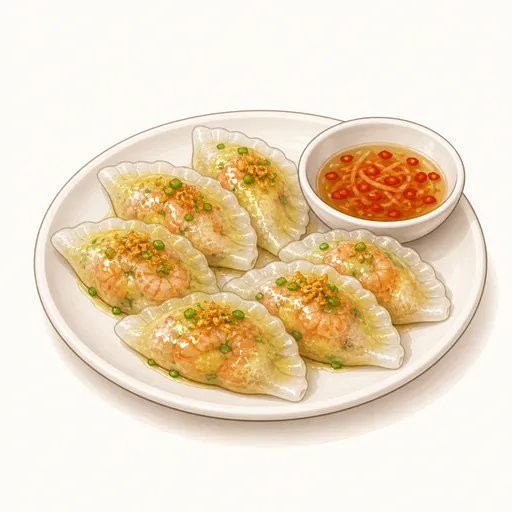
Banh xep is a homey dish from the Mekong Delta with a clear, chewy tapioca wrapper folded into a half-moon around a filling of mung beans, pork and shrimp. The dumplings are boiled, drizzled with scallion oil and fried shallots, and served with sweet and sour fish sauce and fresh greens, soft and chewy and full of flavor.
- Difficulty
- Medium
- Prep
- 1 hr
- Cook
- 30 min
- Rising or chilling
- 2 hr
- Total time
- 3 hr 30 min
- Method
- Boiled or simmered
Ingredients
Wrapper dough
Filling
Scallion oil
Starch for dusting
Instructions
Step 1
Rinse 150 g split peeled mung beans and soak them in warm water for about two hours, then drain. Soaking first helps the beans cook quickly and turn soft and crumbly. The beans are ready when they are plump and break apart with a light squeeze.
Step 2
Steam the beans for about 20 minutes until soft, then mash them with a spoon while still hot. Beans mashed hot turn smoother and mix more easily with the pork. They are ready when no whole beans remain and the mash holds together when squeezed.
Step 3
Fry 20 g minced shallots in 10 g vegetable oil until fragrant, add 150 g ground pork and 100 g chopped fresh shrimp and stir-fry until firm, season with 10 g fish sauce, 5 g granulated sugar and a pinch ground black pepper, then stir in the mung beans. Cooking the filling until quite dry keeps the wrappers from getting wet and tearing as you fold them. The filling is ready when the meat is cooked and firm, the mixture is dry and crumbly and smells of fried shallots.
Step 4
Mix 250 g tapioca starch, 50 g rice flour and a pinch salt, bring 240 g water and 10 g vegetable oil to a boil and pour it slowly into the flour, stirring with chopsticks until it cools a little, then knead by hand. The boiling water partly cooks the starch, which makes the tapioca bind and turn pliable. The dough is ready when it is smooth and pliable, does not stick to your hands and springs back when pressed.
Step 5
Dust the counter with tapioca starch (to taste), divide the dough into balls about the size of a small plum and roll each into a thin round about ten centimeters across. Evenly thin wrappers cook quickly and turn beautifully clear. The wrappers are ready when they are about two millimeters thick and do not tear when lifted.
Step 6
Place a spoonful of filling in the center of a wrapper, fold it in half into a half-moon, press the edges firmly and pleat them or crimp them with a fork. Well-sealed edges keep water out and stop the filling from bursting out while boiling. The dumplings are ready when the edges are flat and sealed with no large air pockets inside.
Step 7
Bring a large pot of water to a boil, add the dumplings in batches and boil for about five minutes, and once they float, lift them into a bowl of cool water. A dip in cool water firms the wrappers, makes them chewy and keeps them from sticking together. They are done when the wrappers turn from opaque white to clear and you can faintly see the filling inside.
Step 8
Heat 30 g vegetable oil over low heat, add 30 g finely sliced scallions, turn off the heat right away and stir well. Scallions cooked only by the heat of the oil keep their green color and aroma. The scallion oil is ready when the scallions are soft and bright green and the oil smells gently fragrant.
Step 9
Lift the dumplings onto a plate, drizzle with scallion oil and toss gently so they are evenly glossy, then serve with sweet and sour fish sauce and fresh greens. The scallion oil keeps the dumplings from sticking together and adds a rich aroma. The plate is ready when every dumpling is glossy, clear and separate.
Equipment
- Small saucepan
- Steamer
- Nonstick skillet
- Rolling pin
- Bench scraper
- Mixing bowl
- Kitchen scale
Tips
- You can add a little diced jicama to the filling for a sweet, refreshing crunch.
- If the dough dries out and cracks while you are wrapping, cover the unused dough with a damp towel and knead in a few drops of hot water.
- Let the filling cool completely before wrapping so its heat does not make the wrappers soft and mushy.
Storage
Boiled banh xep should be eaten the same day. Uncooked dumplings can be spread out on a tray, frozen, then packed into an airtight bag and kept in the freezer for up to a month; when needed, boil them straight from frozen for about two minutes longer.
Common problems and how to fix them
- The wrappers tear or the filling bursts out while boiling.
- The edges were not sealed tightly or the wrappers were too thin. Dab a little water on the edges before pressing them and roll the wrappers slightly thicker.
- The wrapper dough is crumbly, not pliable, and cracks when rolled.
- The water was not boiling hard enough, so the starch did not cook. Bring the water to a rolling boil, pour it into the flour right away and knead while the dough is still warm.
- The boiled dumplings stick together.
- They were not dipped in cool water or coated with oil. Drop them into cool water as soon as you lift them out and toss them with scallion oil while still warm.
This recipe is based on the common ratios for this bake and is written entirely in our own words.