Vietnamese mini sponge cakes (banh thuan)
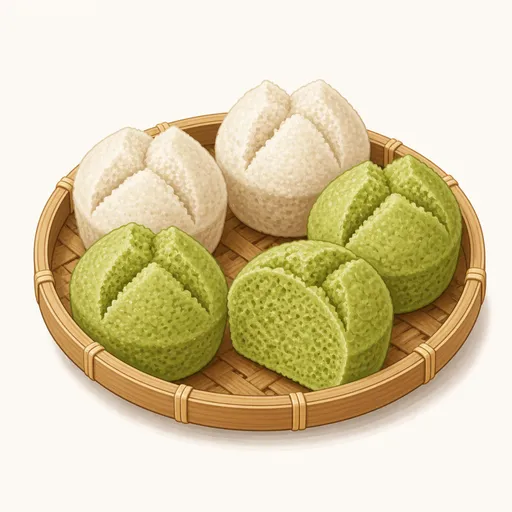
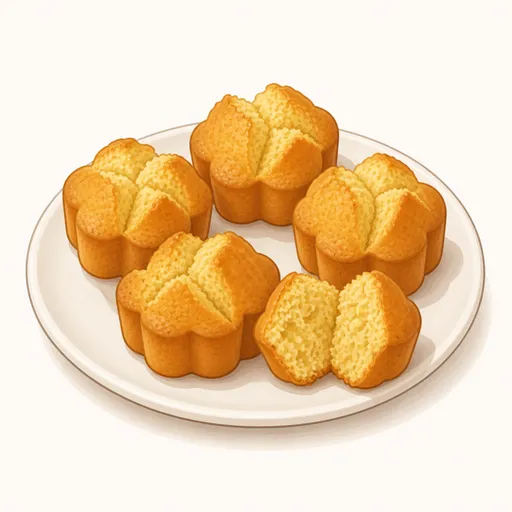
Banh thuan are small flower-shaped baked cakes that belong on the Lunar New Year table in central and southern Vietnam. Made from eggs whipped with sugar and tapioca starch, they have a slightly crisp outside and a light, airy crumb that melts in your mouth, fragrant with egg and vanilla.
- Difficulty
- Easy
- Prep
- 25 min
- Cook
- 30 min
- Total time
- 55 min
- Method
- Oven-baked
Ingredients
Batter
Preparing the molds
Instructions
Step 1
Heat the oven to 170°C, brush each cavity of a flower-shaped mold with a very thin film of vegetable oil (to taste), then put the mold in the oven to heat for about ten minutes. A hot mold makes the batter puff up the moment it goes in, so the petals burst open. The mold is ready when the oil in the cavities starts to smoke lightly.
Step 2
Crack 200 g eggs into a clean, dry bowl, add 130 g superfine sugar and 3 g lime juice, and beat with a mixer on high speed for about ten minutes. The air you whip in now is the only thing that makes the cakes rise, so beat long enough. The eggs are ready when they are pale ivory, tripled in volume, and a ribbon drawn on the surface holds its shape for a few seconds when you lift the beaters.
Step 3
Sift 80 g tapioca starch and 40 g cake flour over the eggs in two additions, add 3 g vanilla extract and gently fold with a flat spatula, scooping up from the bottom of the bowl. Mixing too hard will burst the bubbles and the baked cakes will turn tough. The batter is ready when no white streaks remain and it is still airy and falls in a thick ribbon.
Step 4
Spoon the batter into a piping bag, take the hot mold out and quickly pipe batter into each cavity until about eighty percent full, then put the mold straight back in the oven. Working fast keeps the mold from cooling and the batter from deflating. The mold is filled right when the batter almost reaches the rim and the surface is still smooth and glossy.
Step 5
Bake at 170°C for about 12 to 15 minutes, without opening the oven door during the first ten minutes. Steady heat lets the cakes open evenly into petals without sinking in the middle. They are done when the petals have cracked open, the tops are deep golden and they feel dry and springy when lightly pressed.
Step 6
Take out the mold, gently pry around the edges with a toothpick to lift the cakes onto a rack, and let them cool completely before packing them into a container. Cooling on an airy rack dries the outside so it keeps a light crispness. They are ready when they feel light in your hand, the bottoms are evenly golden and no warmth remains.
Equipment
- Oven
- Shaping molds
- Hand mixer
- Sieve
- Spatula
- Piping bag
- Pastry brush
- Kitchen scale
- Mixing bowl
Tips
- Room-temperature eggs whip up faster and finer than eggs straight from the fridge, so take them out about thirty minutes ahead.
- If you are baking several batches, oil and reheat the mold before each fill so every cake puffs up just as nicely.
- You can swap the vanilla for a few drops of pandan extract to make fragrant green banh thuan.
Storage
Once cooled, store the cakes in an airtight container or glass jar for about a week at room temperature. Keep them away from humidity, because they absorb moisture, soften and lose their airy texture.
Common problems and how to fix them
- The cakes stay flat instead of puffing into flowers.
- The mold was not hot enough or the eggs were underwhipped. Heat the mold longer and beat the eggs until a ribbon drawn on the surface holds its shape.
- The cakes turn hard and tough once cooled.
- The batter was overmixed and lost its air bubbles. Next time fold only until the flour is just combined with the eggs, then stop right away.
This recipe is based on the common ratios for this bake and is written entirely in our own words.