Cassava noodle cake (banh tam khoai mi)
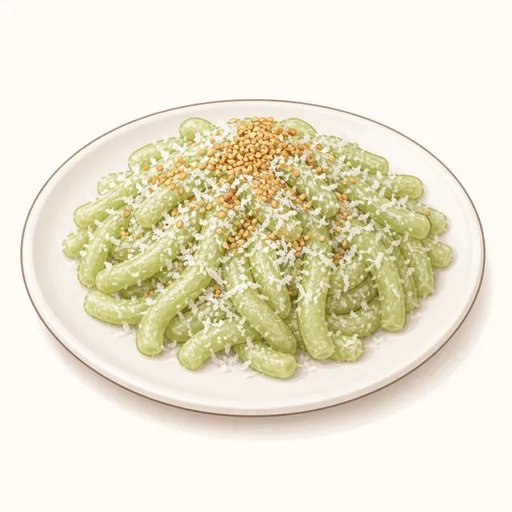
Banh tam khoai mi is a homey snack from southern Vietnam: fresh cassava is finely grated, steamed, then cut into little wiggly strands that look like silkworms. The strands are chewy, lightly sweet and a cool pandan green, and they are tossed with grated coconut and sesame salt for a rich, nutty, sweet and salty bite that is hard to stop eating.
- Difficulty
- Easy
- Prep
- 40 min
- Cook
- 35 min
- Rising or chilling
- 1 hr 30 min
- Total time
- 2 hr 45 min
- Method
- Steamed
Ingredients
Cassava dough
Coconut and sesame salt
Preparing the pan
Instructions
Step 1
Peel away both the brown outer skin and the pink inner skin of the cassava, soak it in lightly salted water for a few hours, then cut it into chunks and blend or grate it very finely. The inner skin and sap taste bitter, and the salt soak helps remove some of the natural toxins. The cassava is ready when it is as smooth as thick porridge with no large fibers left.
Step 2
Put the grated cassava in a cloth bag and squeeze out some of the liquid, then weigh out 600 g pressed fresh cassava. Let the squeezed liquid settle and keep the layer of starch at the bottom. Squeezing out the liquid gives a firm, chewy cake, and stirring the settled starch back in makes it more translucent. The pressed cassava is ready when it is moist but no longer drips when you squeeze it.
Step 3
Mix the pressed cassava with the settled starch, 80 g tapioca starch, 120 g granulated sugar, a pinch salt and 40 g pandan juice, squeezing it together with your hands until the sugar has dissolved. When the sugar dissolves evenly, the steamed cake is sweet throughout and turns a lovely green. The mixture is ready when it is an even pale green and holds together when squeezed in your fist.
Step 4
Brush a square pan with to taste vegetable oil, spread the cassava mixture about two centimeters thick, smooth the top, and steam over high heat for about 30 minutes. Strong, steady heat cooks the cassava until it is translucent with no raw, starchy taste. The cake is done when the whole block has turned translucent and a deeper green and feels chewy when pressed.
Step 5
Lift out the pan and let the cake cool completely at room temperature for about an hour and a half. The hot cake is very soft and sticky, and only once it has cooled is it firm enough to cut into strands. It is ready when the bottom of the pan feels cool and the surface no longer sticks to your fingers.
Step 6
Toast 20 g white sesame seeds in a pan over low heat, stirring constantly, then let them cool and lightly crush them with 20 g superfine sugar and a pinch salt. Toasting slowly cooks the seeds evenly and brings out their aroma without turning them bitter. The sesame salt is ready when the seeds are ivory gold and crush into a loose, fragrant, nutty powder.
Step 7
Turn the cake out onto a cutting board, cut it into thin sheets, then use an oiled knife to cut them into strands about as thick as a chopstick, or press it through a coarse shredder. Thin, even strands let each bite pick up plenty of coconut and sesame salt. The strands are ready when they separate easily and are chewy without breaking apart.
Step 8
Put the strands in a bowl, scatter 150 g freshly grated coconut over them and toss gently to loosen them, then sprinkle with more sesame salt just before eating. The coconut coating keeps the strands from sticking together and adds richness. The dish is ready when every green strand is evenly coated in white coconut.
Equipment
- Steamer
- Square pan
- Food processor
- Mixing bowl
- Sieve
- Nonstick skillet
- Kitchen scale
Tips
- If you cannot find fresh cassava, you can use store-bought frozen grated cassava; just thaw it and squeeze it dry before weighing.
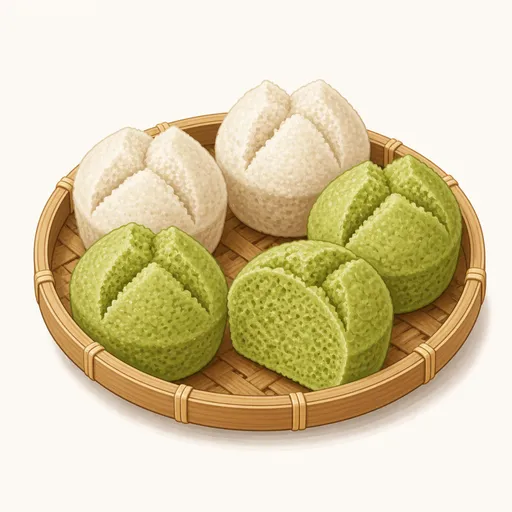
- You can divide the mixture into three portions and color one with pandan, one with magenta leaf and leave one plain white for a colorful platter.
- Steam the grated coconut for about five minutes before tossing so it keeps longer without turning sour.
Storage
Cassava noodle cake is best on the day it is made. Any cake not yet tossed with coconut can be wrapped tightly and kept in the fridge for two days; steam it again to soften it before tossing it with the grated coconut and sesame salt.
Common problems and how to fix them
- The cake is mushy and sticky and will not cut into strands.
- The cassava was not squeezed dry enough, or the cake had not cooled completely. Squeeze it more thoroughly next time and let the cake rest longer before cutting.
- The cake still tastes raw and is cloudy in the middle.
- The cassava layer was too thick or the steaming heat was too low. Spread it thinner and steam for ten more minutes until the whole block is evenly translucent.
This recipe is based on the common ratios for this bake and is written entirely in our own words.