Tapioca crescent dumplings (banh quai vac)
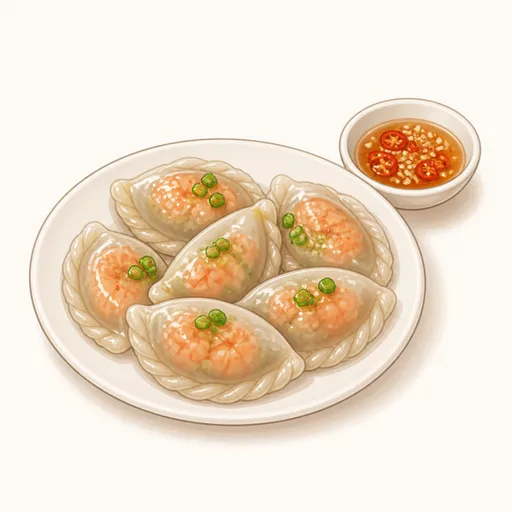
Banh quai vac are humble boiled dumplings from central Vietnam, half-moon shaped with pleated edges that look like the handle of an old bronze cauldron. The tapioca starch wrapper is crystal clear and chewy, showing off the pinkish-red shrimp and pork filling inside. They are best eaten hot with scallion oil and sweet and tangy fish sauce.
- Difficulty
- Medium
- Prep
- 1 hr
- Cook
- 30 min
- Rising or chilling
- 15 min
- Total time
- 1 hr 45 min
- Method
- Boiled or simmered
Ingredients
Wrapper
Shrimp and pork filling
Scallion oil
Fish sauce dip
Instructions
Step 1
Soak 10 g dried wood ear mushrooms in warm water for about 20 minutes, then trim off the tough stems and cut them into very thin strips. Fully rehydrated wood ears have a pleasant crunch and keep the filling from tasting dry. They are ready when they are soft, several times thicker than when dry and have no hard spots in the center.
Step 2
Peel 200 g fresh shrimp, remove the dark veins and dice them, cut 150 g pork belly into small pieces the size of corn kernels and finely mince 20 g shallots. Cutting the filling small and evenly makes the dumplings easier to wrap and keeps the wrappers from tearing. The filling is ready when the pieces of shrimp and pork are about the same size.
Step 3
Fry the shallots in a pan until fragrant, add the pork belly and stir-fry until it renders its fat, then add the shrimp, wood ears, 15 g fish sauce, 8 g granulated sugar and a pinch of ground black pepper and toss over medium heat for about 10 minutes. Cooking until the liquid has evaporated keeps the filling dry so it does not make the wrappers soggy. The filling is ready when the shrimp are bright red, the pork has firmed up and no liquid remains in the pan.
Step 4
Bring 200 g water to a boil with a pinch of salt and 10 g vegetable oil, pour it slowly into a bowl of 300 g tapioca starch and stir quickly with chopsticks, then knead by hand once it has cooled a little. Boiling water partly cooks the starch, so the dough is pliable, rolls thin easily and does not crack. The dough is ready when it is smooth, does not stick to your hands and a fingertip dent holds its shape.
Step 5
Divide the dough into small balls the size of a jujube and roll each one into a thin round about two millimeters thick. Place a spoonful of filling in the center, fold it in half and pinch and twist along the edge with your fingers to form a pleated border. Tightly pinched edges do not burst open during boiling and create the signature cauldron-handle shape. The dumplings are ready when the edges are evenly sealed, the bellies are plump with filling and there are no holes.
Step 6
Bring a large pot of water to a rolling boil, add the dumplings in moderate batches and stir gently so they do not stick to the bottom. Boil for about 5 to 6 minutes, then transfer them straight into a bowl of cool water. The cool water bath firms up the wrappers, makes them less sticky and keeps them chewy. They are done when they float to the surface and the wrappers turn from opaque white to completely clear.
Step 7
Finely chop 30 g scallions, heat 30 g vegetable oil over low heat until very hot, pour it over the scallions and mix well, then brush it over the drained dumplings. The scallion oil adds fragrance and keeps the dumplings from sticking to each other. It is ready when the scallions turn glossy green but have not darkened.
Step 8
Pound 10 g garlic until fine, dissolve 30 g granulated sugar in 60 g water, then add 40 g fish sauce and 20 g lime juice. Dissolving the sugar in water first makes the dip clearer and more balanced. The dip is ready when it tastes salty, sweet and a little sour at once, with the garlic floating on top.
Equipment
- Small saucepan
- Nonstick skillet
- Mixing bowl
- Kitchen scale
- Rolling pin
- Plastic wrap
Tips
- Keep the dough you are not using covered with plastic wrap as you go, because tapioca dough dries on the surface very quickly and cracks when folded.
- For the pale yellow wrappers you find in Quang Binh, add a few drops of annatto oil to the boiling water before scalding the starch.
- Do not boil too many dumplings at once, or the water will stop boiling and the dumplings will clump together.
Storage
The dumplings are best eaten the day they are made. Keep leftovers in an airtight container in the fridge for up to two days, and simply steam them for about five minutes before eating so the wrappers turn clear and soft again.
Common problems and how to fix them
- The wrappers crack when folded in half.
- The dough was short on water or the water was not boiling hard enough when you scalded it. Dip your hands in warm water and knead the dough a little more to moisten it, and next time use water at a full rolling boil.
- The dumplings still have an opaque white core after boiling.
- The wrappers were rolled too thick or the dumplings were lifted out too early. Roll them thinner and boil one to two minutes longer after they float.
This recipe is based on the common ratios for this bake and is written entirely in our own words.