Puffed sticky rice crackers (banh phong)
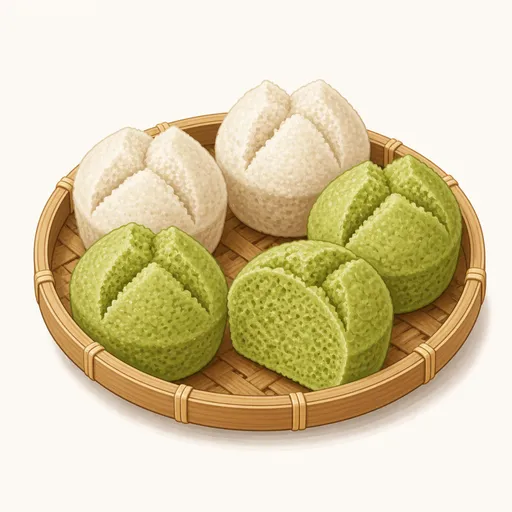
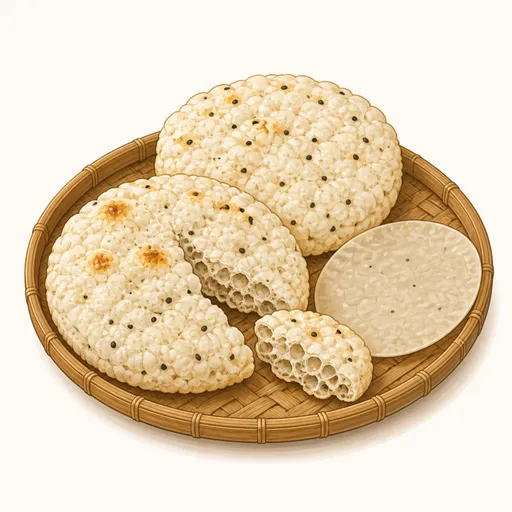
Banh phong is a specialty of the Mekong Delta, made from steamed glutinous rice pounded with sugar and coconut milk, rolled thin and dried in the sun until bone dry. Grilled over glowing coals, each cracker puffs up to several times its size, turning light, crisp, rich and sweet with the aroma of new-crop sticky rice, an essential treat for the Lunar New Year in the orchard country.
- Difficulty
- Hard
- Prep
- 1 hr 30 min
- Cook
- 30 min
- Rising or chilling
- 30 hr
- Total time
- 32 hr
- Method
- Grilled
Ingredients
Sticky rice dough
Oil for rolling
Instructions
Step 1
Rinse 500 g glutinous rice well and soak it in cold water for about six hours or overnight, then rinse again and drain thoroughly. Rice soaked long enough steams evenly tender and sticky and pounds smooth easily. The rice is ready when a grain crumbles easily when pressed between two fingers.
Step 2
Spread the rice evenly in a cloth-lined steamer and steam over high heat for about 30 minutes, fluffing it once halfway through. Fluffing helps the rice on the bottom and on top cook at the same rate. The sticky rice is done when the grains are translucent, soft and chewy with no white core.
Step 3
Put the hot sticky rice in a food processor or mortar, add 120 g granulated sugar, 120 g coconut milk, 4 g salt and 20 g black sesame seeds, then process or pound until all the grains have broken down. Work while the rice is still hot, because cooled sticky rice hardens and will not blend with the sugar. The dough is ready when it is smooth, sticky and stretchy, with no visible grains of rice.
Step 4
Rub a little vegetable oil (to taste) on your hands and on two sheets of plastic wrap. Divide the dough into balls the size of a small lime, place one between the sheets and roll it into a thin round about two to three millimeters thick and about fifteen centimeters across. Evenly thin rounds dry quickly and puff evenly when grilled. You have rolled them right when light shows faintly through the round and the edges are not torn.
Step 5
Arrange the rounds on bamboo racks or mesh trays and dry them in strong sun for about one to two days, turning them once each session. They must be completely dry inside so that the little moisture left turns to steam and puffs them during grilling instead of making them tough. They are dry when they are hard and brittle, snap cleanly when broken and look opaque white.
Step 6
Grill each cracker over glowing coals or a medium flame, holding it with two chopsticks, turning it constantly and pressing lightly so it puffs evenly; if you have no coals, you can microwave it on high for about one minute. Constant turning lets the cracker puff evenly without burning in one spot. It is ready when it has puffed to two to three times its size, light and ivory white with a few golden spots.
Step 7
Let the puffed crackers cool for about a minute so they crisp up fully, then set them on a platter, break off pieces and eat right away. Freshly grilled crackers have the best crunch and the most intense aroma. You will hear a crisp crackle as you break them and see a crumb as airy as a honeycomb.
Equipment
- Steamer
- Food processor
- Rolling pin
- Plastic wrap
- Microwave
- Kitchen scale
Tips
- If you live somewhere without much sun, you can dry the crackers in the oven at 60°C for about six to eight hours with the door slightly open to let the moisture out.
- You can pound a little steamed sweet potato into the dough to make sweet potato crackers with a sweet, nutty taste and a pretty golden color.
- If the dough sticks to the plastic wrap while rolling, rub on a tiny bit more oil instead of dusting with dry flour, which leaves the surface chalky white.
Storage
Sun-dried crackers keep for up to three months in an airtight bag or tin in a dry place. Puffed crackers should be eaten the same day, because they absorb moisture and soften very quickly.
Common problems and how to fix them
- The crackers do not puff when grilled; they just curl and stay hard.
- The crackers were not fully dry or were rolled too thick. Dry them longer in the sun and roll the next batches thinner.
- The crackers crack while drying.
- The dough was not pounded smooth enough or was dried in harsh sun right from the start. Pound more thoroughly and dry them in gentle sun for the first session.
- The crackers puff unevenly, with some spots still dense and hard.
- The heat was uneven or you did not turn the crackers fast enough. Hold them a moderate distance from the coals and keep turning them constantly.
This recipe is based on the common ratios for this bake and is written entirely in our own words.