Pressed sticky rice flour cakes (banh khao)
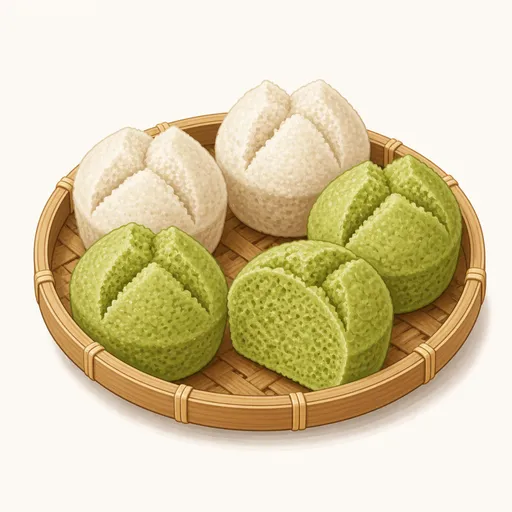
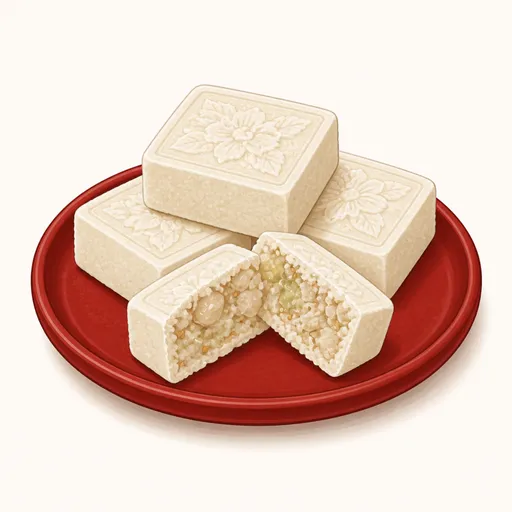
Banh khao is a traditional Lunar New Year cake from northern Vietnam, made from roasted glutinous rice flour mixed with moistened sugar and pressed into molds, with no cooking or baking needed. The cakes are ivory white and as fine as powder, and they slowly melt in your mouth with a delicate sweetness, hiding crystal-clear bits of sugared pork fat, candied winter melon and nutty toasted sesame inside.
- Difficulty
- Medium
- Prep
- 45 min
- Cook
- 10 min
- Rising or chilling
- 24 hr
- Total time
- 24 hr 55 min
- Method
- No cooking
Ingredients
Roasted rice flour and sugar
Sugared pork fat filling
Instructions
Step 1
Mix 270 g powdered sugar with 60 g water and 1 g pomelo blossom essence, rub it together evenly, cover tightly and leave it overnight, about eight hours. Sugar that has been left to moisten binds the glutinous rice flour without making the cakes hard. The sugar is ready when it is soft and damp like wet sand, clumps together when squeezed and has no dry grains left.
Step 2
Boil 60 g pork fat over medium heat for about five minutes, cut it into small dice the size of corn kernels, then mix it with 40 g granulated sugar and leave it to cure for about four hours. The sugar draws the water out of the fat, making it clear and crisp with no greasy taste. The fat is ready when the pieces have turned as clear as crystal and the sugar has melted into a thick syrup.
Step 3
Toast 20 g white sesame seeds in a dry pan over low heat for about four minutes, stirring steadily. Sesame toasted just right is fragrant and nutty rather than bitter, and it lifts the flavor of the filling. The seeds are ready when they are pale golden and clearly fragrant.
Step 4
Finely chop 60 g candied winter melon and mix it evenly with the drained sugared fat and toasted sesame. Small, even pieces of filling let the cakes press tightly without holes, and every bite gets some filling. The filling is ready when the ingredients are evenly spread through and cling together slightly.
Step 5
Sift 300 g roasted glutinous rice flour into a large bowl, add the moistened sugar and gently rub them between your palms until the sugar and flour are combined, then sift the mixture once more. Rubbing by hand coats every grain of flour with sugar, and sifting again makes it fine and loose for a smooth surface. The dough is ready when a squeezed handful holds together but crumbles apart with a gentle press.
Step 6
Dust the mold with a thin layer of flour, press half the dough in firmly, place a spoonful of filling in the center, cover with more dough to fill the mold, then press very hard with a pestle, level the top and tap gently to release the cake. Pressing hard is the secret to cakes that do not crumble in your hand and keep a crisp pattern. They are ready when they come out of the mold whole, with clean sharp edges and a clear pattern on top.
Step 7
Arrange the cakes on a tray, cover them with thin paper and leave them in a dry, airy place for about twelve hours before wrapping them in cellophane. Resting lets the moisture in the sugar spread evenly, so the cakes firm up and are easy to handle. They are ready when they feel solid in your hand, the surface is dry and smooth and they no longer show fingerprints.
Equipment
- Shaping molds
- Sieve
- Mixing bowl
- Small saucepan
- Nonstick skillet
- Plastic wrap
- Kitchen scale
Tips
- If you do not have ready-made roasted glutinous rice flour, toast regular glutinous rice flour in a pan over low heat until it turns white, light and fragrant, then let it cool completely before using.
- In dry weather, add a few drops of water to the sugar; in damp, humid weather, use a little less water so the dough does not turn mushy.
- You can swap the candied winter melon for candied ginger or crushed roasted peanuts to change up the filling.
Storage
Wrapped individually in cellophane or kept in an airtight container, banh khao keep for about two to three weeks in a cool, dry place. Keep them away from damp spots, where they absorb moisture and turn soft and mushy, and do not refrigerate them.
Common problems and how to fix them
- The cakes crumble when you take them out of the mold.
- The sugar was not moist enough or the dough was not pressed firmly. Sprinkle a few more drops of water over the sugar, let it sit a little longer, then press harder in the mold.
- The cakes turn rock hard after a day.
- The moistened sugar held too much water, so it set hard as it dried. Next time, use less water and only let the sugar get as damp as wet sand.
This recipe is based on the common ratios for this bake and is written entirely in our own words.