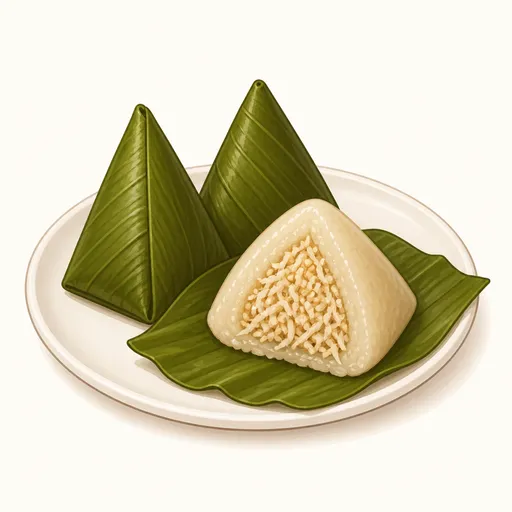
Sticky rice dumplings with coconut filling (banh it dua)
Banh it dua are a familiar sight on offering trays and at family memorial gatherings in central and southern Vietnam. A soft, smooth glutinous rice shell hugs a sweet, fragrant filling of coconut cooked down with sugar and a nutty touch of toasted sesame, all wrapped in banana leaves shaped into a little pyramid. They are humble cakes, but you will never tire of them.
- Difficulty
- Easy
- Prep
- 50 min
- Cook
- 35 min
- Rising or chilling
- 20 min
- Total time
- 1 hr 45 min
- Method
- Steamed
Ingredients
Glutinous rice shell
Sweet coconut filling
Wrapping leaves and oil
Instructions
Step 1
Put 250 g freshly grated coconut, 120 g granulated sugar and a bundle of 10 g pandan leaves in a nonstick pan and stir over low heat for about 15 minutes. Turn off the heat, remove the pandan leaves and mix in 10 g toasted white sesame seeds. Cooking over low heat lets the sugar soak into every shred of coconut without scorching. The filling is ready when the coconut looks glossy and translucent with a slight ivory tint, rolls into balls and no syrup runs out.
Step 2
Dissolve 30 g granulated sugar and a pinch of salt in 220 g warm water, then pour it slowly into a bowl of 300 g glutinous rice flour and knead evenly. A little sugar in the shell keeps it soft longer and adds a gentle sweetness that matches the filling. The dough is ready when it is smooth and pliable, rolls into a ball without cracking and does not stick to your palms.
Step 3
Cover the bowl with plastic wrap and let the dough rest for about 20 minutes; meanwhile, roll the coconut filling into small balls the size of a longan. Dough that has rested long enough is more pliable and easier to wrap thinly and evenly around the filling. The dough is ready when it feels soft and smooth when pressed lightly and the surface has not dried out.
Step 4
Wipe 200 g banana leaves clean, blanch them in boiling water until soft, cut them into squares about twenty centimeters wide and brush the surface with a thin layer of vegetable oil (to taste). Supple leaves do not tear when rolled into cones, and the oil keeps the sticky shell from clinging to the leaf. The leaves are ready when they are soft, glossy green and fold in half without splitting.
Step 5
Divide the dough into equal portions, flatten each into a round in your palm, place a ball of filling in the center and smooth the dough around it into a sealed ball. Set it on a leaf, roll the leaf into a cone and fold the tail of the leaf underneath. The cone shape helps the dumplings stand tall and cook evenly from tip to base. They are ready when they stand steadily on their base and the leaf hugs the dough snugly.
Step 6
Stand the dumplings upright in the steamer, cover and steam over boiling water for about 20 minutes. Standing them up lets the steam circulate evenly so they do not get misshapen. They are cooked when an opened leaf reveals a translucent shell that springs back when pressed lightly, with the color of the filling faintly showing through.
Step 7
Move the dumplings to a tray and let them cool for about ten minutes before unwrapping and enjoying them. As they cool, the sticky shell firms up, so the leaves peel off easily and the dumplings do not turn mushy. They are just right when they keep their pyramid shape after unwrapping and the surface is smooth and glossy.
Equipment
- Steamer
- Nonstick skillet
- Mixing bowl
- Kitchen scale
- Spatula
- Pastry brush
Tips
- Choose a coconut that is neither too young nor too mature, so the filling has a slight bite to the shreds and a rich, fragrant flavor.
- You can replace part of the water in the dough with pandan juice for a pale green, more fragrant shell.
- If the filling is too dry to roll into balls, add a teaspoon of water and stir it again over low heat.
Storage
The dumplings keep for one day at room temperature if left in their leaves. You can refrigerate them for up to three days; steam them again for about five minutes before eating so the shell turns soft and chewy as if freshly made.
Common problems and how to fix them
- The shell slumps and loses its pyramid shape after steaming.
- The dough was too soft or the dumplings were steamed too long. Use less water when kneading, knead until the dough is a bit firmer and check the dumplings after 18 minutes of steaming.
- The coconut filling turns sour or weeps liquid after a day.
- The filling was not cooked down enough and still held too much moisture. Keep cooking until the sugar clings evenly to the coconut shreds and the pan is completely dry.
This recipe is based on the common ratios for this bake and is written entirely in our own words.