Steamed rice rolls (banh cuon)
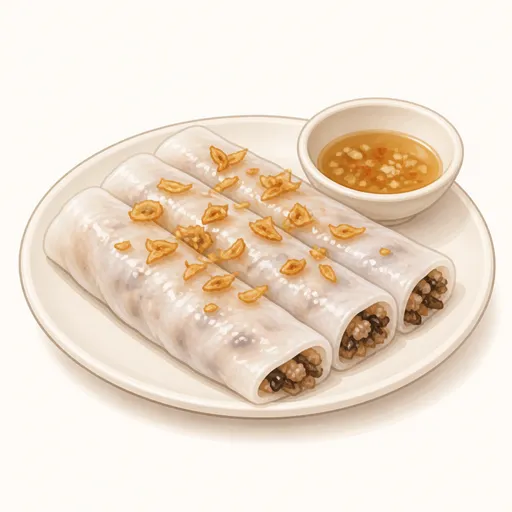
Banh cuon are paper-thin sheets of steamed rice batter, soft, silky and slightly translucent, rolled around a fragrant filling of ground pork stir-fried with wood ear mushrooms. A beloved breakfast in northern Vietnam, they are usually topped with crispy fried shallots and dipped in a sweet and sour fish sauce, and they are surprisingly easy to make at home in a nonstick pan.
- Difficulty
- Medium
- Prep
- 40 min
- Cook
- 45 min
- Rising or chilling
- 1 hr
- Total time
- 2 hr 25 min
- Method
- Steamed
Ingredients
Rice sheet batter
Pork and wood ear mushroom filling
Dipping sauce
Instructions
Step 1
Mix 200 g rice flour, 50 g tapioca starch and a pinch of salt, gradually pour in 800 g water and stir until fully dissolved, then finish with 15 g vegetable oil. A high proportion of water is the secret to thin, soft sheets, while the tapioca starch adds stretch so they don't tear when rolled. The batter is ready when it is slightly thinner than milk and pours in a fine stream.
Step 2
Let the batter rest for about an hour; if you have time, pour off the clear layer of water on top and replace it with the same amount of fresh water. A longer rest mellows the slightly sour smell of the rice and makes the sheets whiter and smoother. The batter is ready when it looks silky when stirred again, with no gritty bits.
Step 3
Soak 15 g dried wood ear mushrooms in warm water for about fifteen minutes, trim off the hard stems and chop them finely, and finely mince 30 g shallots at the same time. Finely chopped mushrooms spread evenly through the filling and give it its signature crunchy bite. The mushrooms are ready when they have softened, swollen several times thicker and have no hard parts left.
Step 4
Sauté half the shallots in 10 g vegetable oil until fragrant, add 250 g ground pork and stir-fry over medium heat, breaking it up, then add the mushrooms and season with 10 g fish sauce and a pinch of ground black pepper. Cooking the filling until crumbly and dry keeps it from making the rice sheets soggy as you roll. The filling is ready when the pork is cooked through with no pink left and the pan is dry; fry the remaining shallots until crisp for the topping.
Step 5
Set a nonstick pan over medium heat, wipe it with a very thin layer of oil, pour in a small ladle of batter and tilt the pan so it spreads evenly, then cover for about a minute. The steam trapped under the lid cooks the sheet gently, so it stays soft and translucent instead of browning. The sheet is done when it turns translucent, the edges lift slightly from the pan and a few small bubbles appear on the surface.
Step 6
Gently invert the pan so the sheet drops onto an oiled tray, spread a line of filling along one edge, fold in the two sides and roll it up into a long log. The oiled tray keeps the thin sheet from sticking, so it rolls easily without tearing. The rolls are ready when they are neat, no filling pokes out of the ends and the sheets look glossy and smooth.
Step 7
Stir 40 g granulated sugar into 120 g warm water until dissolved, then add 40 g fish sauce, 15 g lime juice and 5 g minced garlic and taste to adjust. A slightly thin dipping sauce soaks into the soft rice sheets without overpowering the flavor of the rice. The sauce is ready when it tastes lightly sweet and sour, pleasantly salty, with the garlic floating on top.
Step 8
Arrange the rolls on a plate, sprinkle the crispy fried shallots on top and serve with bowls of dipping sauce and fresh herbs if you have them. The crispy shallots make a lovely contrast with the soft, silky rice sheets. The dish is ready when the rolls are still warm, the shallots are crunchy and the sauce has been portioned into individual bowls.
Equipment
- Nonstick skillet
- Mixing bowl
- Whisk
- Spatula
- Small saucepan
- Kitchen scale
Tips
- Oil the pan only after every three or four sheets; too much oil makes the batter shrink back and the sheets won't spread evenly.
- You can serve the rolls with sliced Vietnamese pork sausage and blanched bean sprouts for a heartier meal.
- If the sheets tear, let the batter rest longer or add a little more tapioca starch for extra stretch.
Storage
Banh cuon are best eaten right away. Wrap any leftover rolls tightly and keep them in the fridge for up to one day, then steam them for a few minutes to soften before eating; the dipping sauce keeps in a sealed jar in the fridge for about a week.
Common problems and how to fix them
- The sheets are thick, rubbery and not translucent.
- The batter was too thick or you poured in too much at a time. Add water to the batter, pour in just a small ladleful and tilt the pan very quickly so the batter spreads thin.
- The sheets stick to the pan and tear when you take them out.
- The pan wasn't hot enough or its nonstick coating is worn. Heat the pan well, wipe on a fresh, very thin layer of oil and wait until the sheet is fully translucent before turning it out.
This recipe is based on the common ratios for this bake and is written entirely in our own words.