Fried mung bean and shrimp cakes (banh cong)
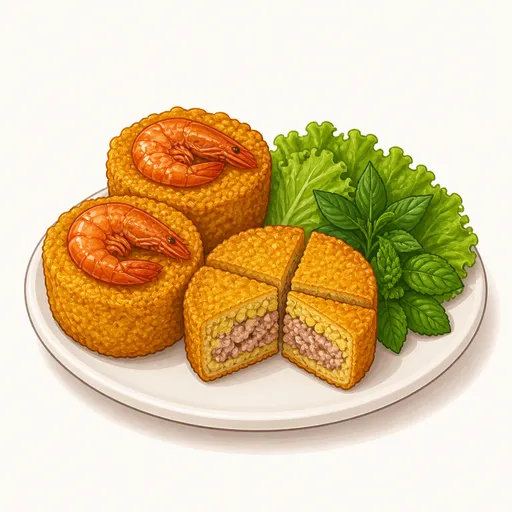
Banh cong are a specialty of Soc Trang, fried in a long-handled cylindrical mold that gives each cake its round, cup-like shape. A crisp, turmeric-golden rice flour shell wraps around nutty mung beans and savory pork, with a bright red shrimp perched on top. The cakes are cut into pieces, wrapped in fresh herbs and lettuce and dipped in a sweet and sour fish sauce.
- Difficulty
- Medium
- Prep
- 45 min
- Cook
- 40 min
- Rising or chilling
- 3 hr
- Total time
- 4 hr 25 min
- Method
- Fried
Ingredients
Batter
Mung bean, pork and shrimp filling
Frying oil
Herbs for serving
Instructions
Step 1
Soak 100 g split peeled mung beans in water for about three hours, then drain them very well. The soaked raw beans cook until nutty right in the oil and form a light, crunchy base for the cakes. They are ready when they are softened and give under a fingernail but are still whole.
Step 2
Whisk 150 g rice flour, 50 g all-purpose flour, 2 g ground turmeric, 3 g baking powder and 3 g salt with 300 g water, then stir in 20 g finely sliced scallions. The all-purpose flour helps the shell hold together, while the rice flour gives it its signature crunch. The batter is ready when it is as thin as milk, evenly yellow and free of lumps.
Step 3
Let the batter rest for about 30 minutes at room temperature and stir it again before using. Resting lets the rice flour absorb the water, so the fried shell turns out smooth and stays crisp longer. The batter is ready when it has settled and feels slightly thicker than at first when you stir it.
Step 4
Mix 150 g ground pork with 15 g minced shallots, 10 g fish sauce, 5 g granulated sugar and a pinch of ground black pepper and leave it to marinate while the batter rests. Marinating ahead lets the pork absorb the seasoning and bind together so it doesn't crumble when fried. The pork is ready when it comes together into a sticky mass that smells of shallot and pepper.
Step 5
Trim the feelers and legs off 200 g fresh shrimp, leaving the shells on so they turn a beautiful red, then rinse and pat them dry. Dry shrimp won't make the oil spatter and will stick firmly to the top of the cakes. They are ready when the surface is dry with no water clinging to them.
Step 6
Heat plenty of oil for deep-frying (to taste) to about 170 degrees Celsius and dip the banh cong mold into the oil for a few minutes to heat it. A hot mold cooks the first layer of batter instantly so it doesn't stick. The mold is ready when a test drop of batter sizzles and bubbles right away.
Step 7
Pour a thin layer of batter into the bottom of the mold, scatter in a layer of mung beans, add a layer of pork, then another layer of mung beans, pour in batter until nearly full and finally top with one or two shrimp. Alternating the layers means every bite has mung beans, pork and crisp shell. The mold is ready when the filling is covered and the batter comes almost to the rim.
Step 8
Lower the whole mold into the oil and fry for about five minutes, keeping the handle upright. Frying in the mold sets the cake into its round, cylindrical shape. It is ready when the outer shell has set and the cake slips out of the mold by itself when you gently jiggle the handle.
Step 9
Use chopsticks to release the cake from the mold, drop it into the oil and keep frying for about four minutes, turning it so every side browns. Frying it freely cooks the pork inside through and makes the shell evenly crisp all over. The cake is done when it is deep golden, the shrimp is bright red and the shell sounds crisp when tapped.
Step 10
Lift the cakes onto a rack to drain, cut each one into quarters and serve with mixed fresh herbs (to taste), lettuce and sweet and sour fish sauce. Cutting them while just warm keeps the shell from shattering. The plate is ready when each cut side clearly shows the layers of golden mung beans and evenly cooked pork.
Equipment
- Deep skillet
- Shaping molds
- Thermometer
- Mixing bowl
- Whisk
- Kitchen scale
- Wire cooling rack
Tips
- If you don't have a banh cong mold, you can use a deep stainless steel ladle with a long handle instead.
- Some cooks add shredded taro between the layers; give it a try for a nuttier, lighter cake.
- Keep the oil steady at around 170 degrees Celsius; oil that is too cool makes the shell greasy, while oil that is too hot burns the outside before the inside is cooked.
Storage
Banh cong are best right after frying. If you have leftovers, keep them in an airtight container in the fridge for a day and re-crisp them in a 180 degree Celsius oven for about eight minutes before eating.
Common problems and how to fix them
- The cake sticks firmly to the mold and breaks when you release it.
- The mold wasn't hot enough before the batter went in. Dip the mold in the hot oil for longer and give the cake enough time to set before releasing it.
- The shell is soft and soaks up a lot of oil.
- The frying oil was too cool or the batter was too thick. Use a thermometer to keep the oil steadily hot and mix the batter as thin as milk.
This recipe is based on the common ratios for this bake and is written entirely in our own words.