Coconut-coated sticky rice balls (banh bao chi)
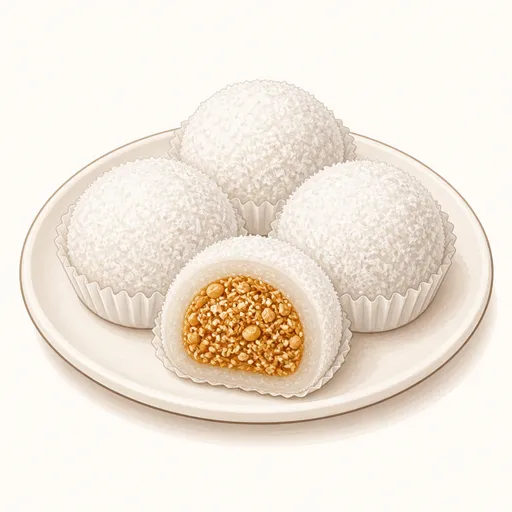
Banh bao chi are pretty little steamed glutinous rice balls with a soft, chewy white shell wrapped around a sweet, nutty filling of peanuts, toasted sesame and grated coconut. After steaming, each ball is rolled in fluffy white desiccated coconut so it looks like a tiny cotton puff. They are rich, fragrant and delightfully chewy, perfect for an afternoon snack with a cup of tea.
- Difficulty
- Easy
- Prep
- 45 min
- Cook
- 15 min
- Rising or chilling
- 20 min
- Total time
- 1 hr 20 min
- Method
- Steamed
Ingredients
Glutinous rice dough
Peanut, sesame and coconut filling
Desiccated coconut coating
Instructions
Step 1
Put 30 g white sesame seeds in a dry pan and toast them over low heat, stirring constantly, for about four minutes. Low heat lets the seeds cook evenly and release their aroma without turning bitter. The sesame is ready when it turns ivory gold, a few seeds start to pop and you can clearly smell its toasty fragrance.
Step 2
Lightly crush 100 g roasted peanuts and put them in a pan with 100 g freshly grated coconut, 60 g granulated sugar and a pinch of salt, cook over low heat for about six minutes, stirring, then mix in the sesame. The melted sugar binds everything together so the filling is easy to roll into balls. The filling is ready when it clumps together, holds as a ball when squeezed and the pan no longer gives off steam.
Step 3
Mix 300 g glutinous rice flour with 20 g granulated sugar, slowly pour in 230 g warm water while kneading, then finally add 10 g vegetable oil, cover tightly and let the dough rest for about twenty minutes. Adding the water little by little lets you control how soft the dough gets, while the oil keeps the shell from drying out and cracking. The dough is ready when it is as smooth and soft as an earlobe, doesn't stick to your hands and doesn't crack at the edge when you press it with a finger.
Step 4
Divide the dough and the filling into twelve equal portions each and roll the filling into small balls. Flatten each piece of dough into a round, place a ball of filling in the middle, then pinch the edges closed and roll it smooth between your palms. Sealing the dough completely keeps the filling from bursting out as the dough softens during steaming. The balls are ready when they are evenly round, smooth and have no cracks anywhere in the shell.
Step 5
Line a steamer basket with perforated parchment paper, arrange the balls about two centimeters apart and steam over high heat for about twelve minutes once the water is at a rolling boil. Strong steam cooks the glutinous rice shell quickly so the balls keep their round shape instead of slumping. They are done when the shell turns from opaque white to more translucent, looks slightly glossy and feels springy and chewy when pressed.
Step 6
Spread 60 g desiccated coconut on a plate, then roll each hot ball gently in it until fully covered and set it on a tray. While still hot the balls are slightly sticky, so the coconut clings firmly and won't fall off as you eat. They are finished when each one is evenly coated in white coconut with no patches of shell showing.
Equipment
- Steamer
- Nonstick skillet
- Mixing bowl
- Spatula
- Parchment paper
- Kitchen scale
Tips
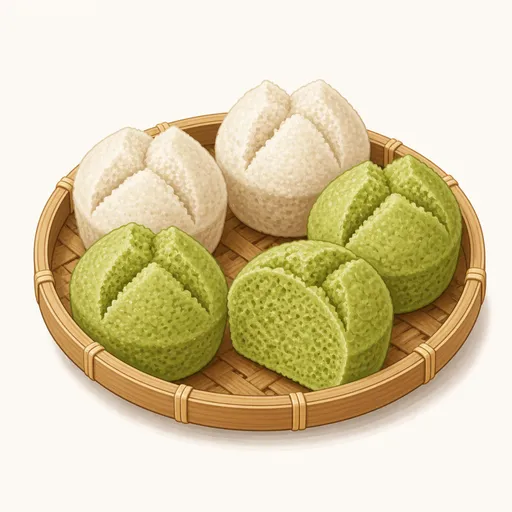
- You can replace some of the water with pandan juice or butterfly pea flower water to make a cheerful mix of green and purple balls.
- Dip your hands in a little vegetable oil before shaping so the dough doesn't stick and the balls come out smoother.
- If you prefer a softer filling, add a tablespoon of coconut milk while cooking it.
Storage
These are best on the day you make them and keep, well covered, at room temperature for about a day. In the fridge the glutinous rice shell hardens, so steam them again for about three minutes and roll them in a little more desiccated coconut before serving.
Common problems and how to fix them
- The shell cracks during shaping or steaming.
- The dough is a little dry. Knead in warm water bit by bit until it is soft and pliable, and always keep the dough you aren't using covered with plastic wrap.
- The balls slump and flatten after steaming.
- The dough had too much water or the steam was too weak. Use a little less water next time and only put the balls in once the steamer is at a rolling boil.
This recipe is based on the common ratios for this bake and is written entirely in our own words.