Baked mung bean cake
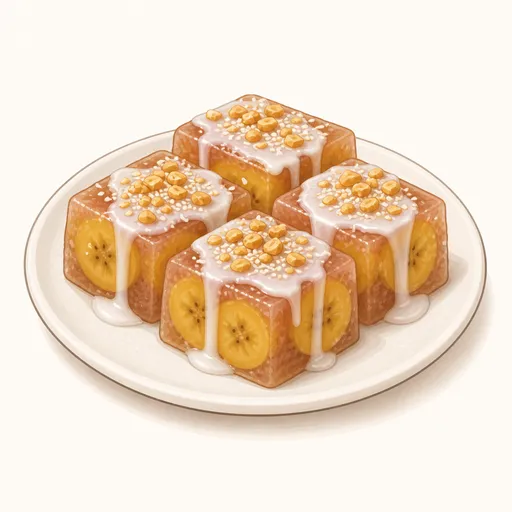
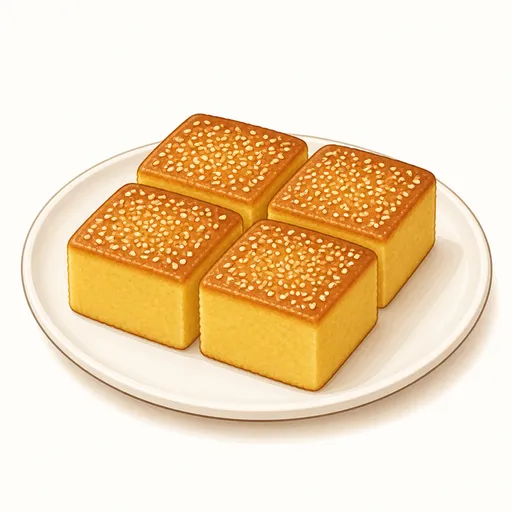
Baked mung bean cake is a homemade treat from southern Vietnam: steamed mung beans are blended with coconut milk, eggs and sugar, then baked until the top is golden and fragrant. The inside is smooth and chewy, rich, nutty and gently sweet, under an irresistible slightly crisp crust sprinkled with toasted sesame seeds.
- Difficulty
- Easy
- Prep
- 40 min
- Cook
- 1 hr
- Rising or chilling
- 5 hr
- Total time
- 6 hr 40 min
- Method
- Oven-baked
Ingredients
Batter
Topping
Instructions
Step 1
Rinse 200 g split peeled mung beans well, soak them in warm water for about four hours, then rinse again to remove any remaining skins and drain. A long enough soak softens the beans evenly so they steam up tender and blend very smoothly. The beans are ready when one breaks apart easily when pinched between two fingers.
Step 2
Spread the beans in a thin layer in a steamer and steam over high heat for about 25 minutes. Steaming instead of boiling keeps the beans from getting waterlogged and preserves their rich, nutty flavor. They are done when the beans have swelled, turned bright yellow and mash easily when pressed with a spoon.
Step 3
Preheat the oven to 170°C, line a 20 cm square pan with parchment paper and brush a thin layer of butter on the sides. A fully heated oven sets the top evenly so it does not crack or sink. The oven is ready when the heating light goes off for the first time.
Step 4
Put the still-warm beans in a blender with 400 g coconut milk, 180 g granulated sugar, 150 g eggs, 40 g melted unsalted butter, 30 g tapioca starch, 3 g vanilla extract and a pinch salt, then blend on high speed for about two minutes. Tapioca starch gives the cake a gentle chew, and blending the beans while warm makes the mixture silkier. The mixture is ready when it is as smooth and thick as thinned condensed milk with no gritty bits of bean.
Step 5
Pour the mixture through a fine-mesh sieve into the pan, pressing any bits left in the sieve through with a flat spatula, then tap the pan gently on the counter a few times. Straining removes bean skins and large air bubbles so the cut cake is as smooth as silk. The batter in the pan is ready when the top is flat and glossy with only a few tiny bubbles left.
Step 6
Sprinkle 10 g white sesame seeds evenly over the top and bake at 170°C for 50 to 60 minutes on the middle rack. Moderate heat sets the inside slowly and thoroughly while giving the top time to brown. The cake is done when the top is golden brown, the edges pull slightly away from the pan and a skewer inserted in the center comes out free of wet batter.
Step 7
Let the cake cool in the pan for about an hour, then lift it out by the parchment and set it on a rack. The inside is still soft while hot and only sets firm once completely cool. It is ready when the bottom of the pan no longer feels warm and the top springs back when pressed.
Step 8
Cut the cake into squares of about five centimeters with a sharp knife wiped on a damp cloth, wiping the knife after every cut. A clean knife gives flat cut faces that show off the golden crumb and the sesame crust. You have cut well when the squares are neat with no smeared edges.
Equipment
- Oven
- Steamer
- Blender
- Square pan
- Sieve
- Whisk
- Parchment paper
- Kitchen scale
Tips
- Chilling the cake overnight before slicing gives firmer, chewier pieces and prettier cut faces.
- You can replace some of the coconut milk with whole milk for a lighter cake, but keep at least half coconut milk to preserve the southern Vietnamese flavor.
- If the top browns too quickly, lay a sheet of foil over it for the last fifteen minutes or so.
Storage
Wrapped well, baked mung bean cake keeps at room temperature for one day or in the fridge for up to four days. Before serving, you can warm it in a 160°C oven for about five minutes to crisp the top again.
Common problems and how to fix them
- The center of the cake is wet and gummy.
- The cake was not baked long enough or was cut while still hot. Bake it ten minutes longer and let it cool completely before slicing.
- The crumb is grainy with bits of bean.
- The beans were not steamed soft enough or were not blended thoroughly. Steam until the beans fall apart completely, blend longer and remember to strain the mixture through a sieve.
- The top cracks and puffs up, then sinks.
- The oven was too hot or the mixture had too many air bubbles. Lower the temperature to 160°C and tap the pan well to drive out the bubbles before baking.
This recipe is based on the common ratios for this bake and is written entirely in our own words.