Baked cassava cake
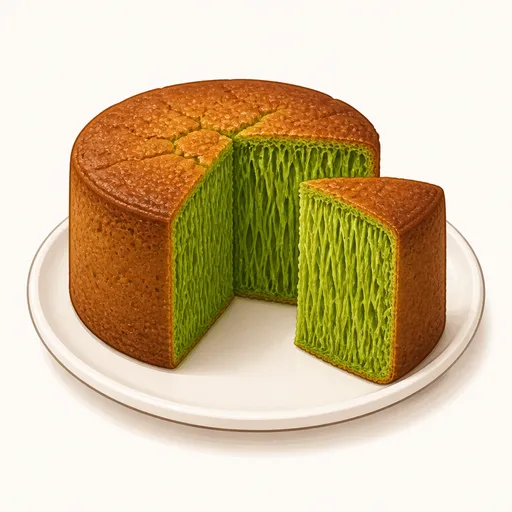
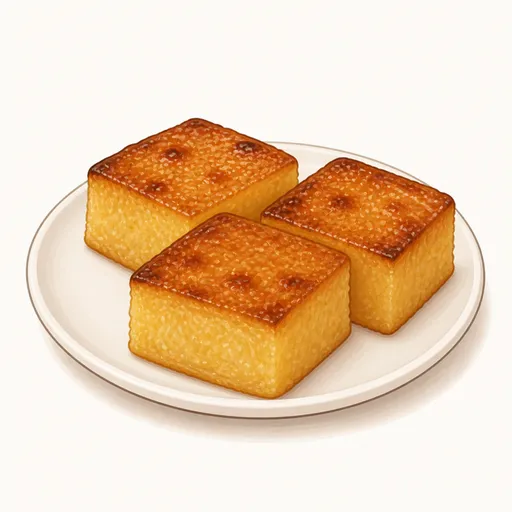
Baked cassava cake has a deep golden top with slightly charred edges, while the inside is dense and chewy, rich with coconut milk and the flavor of fresh cassava. It is a rustic homemade treat from southern Vietnam that is easy to make, and every slice you cut is generous and satisfying.
- Difficulty
- Easy
- Prep
- 40 min
- Cook
- 1 hr 10 min
- Rising or chilling
- 2 hr
- Total time
- 3 hr 50 min
- Method
- Oven-baked
Ingredients
Cassava batter
Preparing the pan
Instructions
Step 1
Preheat the oven to 180°C, line the bottom of a 22 cm square pan with parchment paper and brush to taste vegetable oil on the sides. The parchment lets you lift the cake out in one piece, and the oil gives the edges a golden crunch. The pan is ready when the paper lies flat and the sides are evenly coated with oil.
Step 2
Peel away both the brown outer skin and the pinkish inner layer from 1,000 g fresh cassava, remove the fibrous core in the center, then grate it finely or blitz it in a food processor. Removing all the skin and core keeps the cake from tasting bitter or stringy. The cassava is ready when it is as fine as thick porridge and ivory white.
Step 3
Put the grated cassava in a sieve, press it gently with a spoon to let some of the liquid drain away, then discard that liquid. Removing some moisture makes the cake chewy and firm rather than mushy, but do not squeeze it bone dry. The cassava is ready when a handful squeezed gently releases only a few drops.
Step 4
Put 40 g unsalted butter in a small saucepan, melt it completely over low heat, then take it off the heat to cool slightly. Slightly cooled butter will not cook the eggs when you mix them together. The butter is ready when it is liquid, clear gold and only warm.
Step 5
In a large bowl, mix the cassava with 300 g coconut milk, 220 g granulated sugar, 100 g beaten eggs, the melted butter, 4 g vanilla extract and a pinch salt. Stir until the sugar dissolves so the sweetness spreads evenly through the cake. The mixture is ready when it is thick, creamy yellow and no longer gritty with sugar.
Step 6
Pour the mixture into the pan, smooth the top with a flat spatula and tap the pan on the counter a few times. Tapping drives out air bubbles so the crumb is dense and smooth. The pan is ready when the top is level, with no large air holes, and the batter is about three centimeters deep.
Step 7
Set the pan on the middle rack and bake at 180°C for about 60 to 70 minutes; for the last ten minutes you can turn on the top heat to deepen the color. The long bake lets the cassava inside cook until translucent and chewy. The cake is done when the top is golden brown with a few dark spots, it springs back when pressed lightly and the edges pull away from the pan.
Step 8
Take the pan out and let the cake cool completely in the pan, about two hours. Hot cassava cake is very soft and sticky and needs to cool for the starch to set. It is ready when the bottom of the pan is completely cool and the cake feels firm when pressed.
Step 9
Lift the cake out using the parchment and cut it into squares or rectangles with a large, lightly oiled knife. An oiled knife cuts cleanly without the chewy cake sticking to it. The pieces are right when the cut faces are translucent gold, chewy and hold their shape.
Equipment
- Oven
- Square pan
- Food processor
- Sieve
- Small saucepan
- Mixing bowl
- Spatula
- Kitchen scale
- Parchment paper
Tips
- If you cannot find fresh cassava, use frozen grated cassava; just thaw it and drain off some of the liquid before mixing.
- Adding a little freshly grated coconut to the mixture gives the cake more texture and a stronger coconut flavor.
- Always remove the core and cook cassava thoroughly, because raw cassava contains natural toxins.
Storage
The cake keeps at room temperature in an airtight container for one day. Refrigerate it for up to four days, and warm it in the microwave for about thirty seconds or in the oven for a few minutes to make it soft and chewy again.
Common problems and how to fix them
- The center is still raw and opaque white.
- The cake was not baked long enough or the pan was too deep. Bake it fifteen minutes longer and cover the top with foil if it is already deep golden.
- The cake is dry and crumbly.
- The cassava was squeezed too dry or the cake was overbaked. Next time, press just lightly to drain some liquid and check the cake ten minutes earlier.
This recipe is based on the common ratios for this bake and is written entirely in our own words.