Snickerdoodles
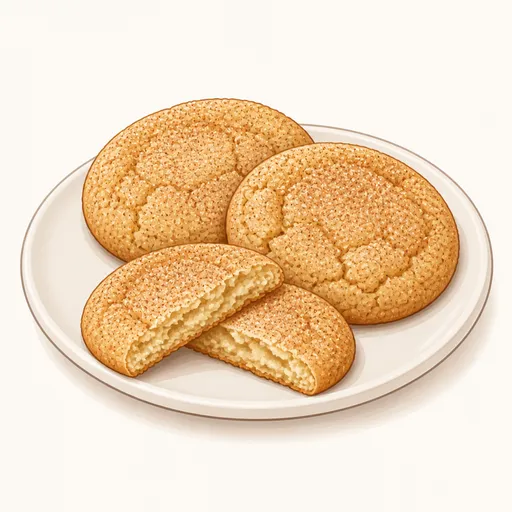
Snickerdoodles are a classic American butter cookie, rolled in cinnamon sugar before baking so the outside sparkles and smells warmly of cinnamon. Thanks to cream of tartar, they have a uniquely subtle tang, with slightly crisp edges and soft, chewy centers.
- Difficulty
- Very easy
- Prep
- 20 min
- Cook
- 11 min
- Rising or chilling
- 30 min
- Total time
- 1 hr 1 min
- Method
- Oven-baked
Ingredients
Cookie dough
Cinnamon sugar for rolling
Instructions
Step 1
Let 170 g unsalted butter soften at room temperature, then put it in a bowl with 200 g granulated sugar and beat with a mixer on medium speed for about three minutes. Creaming butter with sugar creates tiny air pockets that help the cookies rise and stay soft. Stop when the mixture turns ivory, light and fluffy, and has clearly grown in volume.
Step 2
Add 100 g eggs to the butter one at a time, beating well after each, then add 5 g vanilla extract. Adding the eggs slowly keeps the butter from separating and holds its fluffiness. The mixture is ready when it's smooth like frosting, with no runny egg streaks and no curdled look.
Step 3
In a separate bowl, mix 280 g all-purpose flour with 6 g cream of tartar, 4 g baking soda and 2 g salt, then add it to the butter mixture and stir with a flat spatula on low speed. Mixing the dry ingredients first spreads the leavening evenly so the cookies rise evenly. The dough is ready when it's soft, pliable and the streaks of white flour have just disappeared.
Step 4
Cover the bowl with plastic wrap and refrigerate the dough for about thirty minutes. Cold dough keeps the butter solid, so the cookies spread less in the oven. The dough is cold enough when it feels firm when you press it and no longer sticks to your fingers.
Step 5
While the dough rests, preheat the oven to 190°C and line two baking sheets with parchment paper. A hot, fully preheated oven sets the edges quickly while the centers stay soft. The oven is ready after a full fifteen minutes of preheating, when the heat indicator light goes off.
Step 6
Mix 50 g granulated sugar with 8 g ground cinnamon on a plate, divide the dough into balls about the size of a walnut, roll each one in the cinnamon sugar and place them about five centimeters apart on the baking sheets. The generous spacing gives the cookies room to spread without touching. Each ball is ready when it's fully coated in light brown cinnamon sugar.
Step 7
Bake one sheet at a time at 190°C for 9 to 11 minutes, rotating halfway through if your oven heats unevenly. Taking them out a little early keeps the signature chewy center. They're done when the edges are pale golden, the tops have crackled and the centers still look slightly puffy and soft.
Step 8
Let the cookies rest on the pan for about five minutes, then move them with a spatula to a wire rack to cool completely. Fresh from the oven they're very soft, and a short rest on the pan firms them up enough to lift without breaking. They're ready when the centers have sunk into crackled tops and the bottoms are dry.
Equipment
- Oven
- Hand mixer
- Mixing bowl
- Spatula
- Kitchen scale
- Baking sheet
- Parchment paper
- Wire cooling rack
- Refrigerator
Tips
- If you don't have cream of tartar, you can replace both the cream of tartar and the baking soda with baking powder equal to their combined amount, but the cookies will lose their signature gentle tang.
- Using an ice cream scoop to portion the dough keeps the cookies the same size so they bake evenly.
- You can roll the dough balls in cinnamon sugar ahead of time and freeze them; when you're ready, just bake them a minute or two longer.
Storage
Once completely cool, store the cookies in an airtight container at room temperature for about five days. Tucking a slice of bread into the container helps them stay soft longer.
Common problems and how to fix them
- The cookies spread thin and ran into each other on the pan.
- The butter was too soft or the dough wasn't chilled. Refrigerate the dough for another fifteen minutes and let the pan cool completely before adding the next batch.
- The cookies are hard and dry like crackers.
- They baked too long. Take them out while the centers are still puffy and soft, since they keep cooking from the heat of the pan.
This recipe is based on the common ratios for this bake and is written entirely in our own words.