Pizzelle
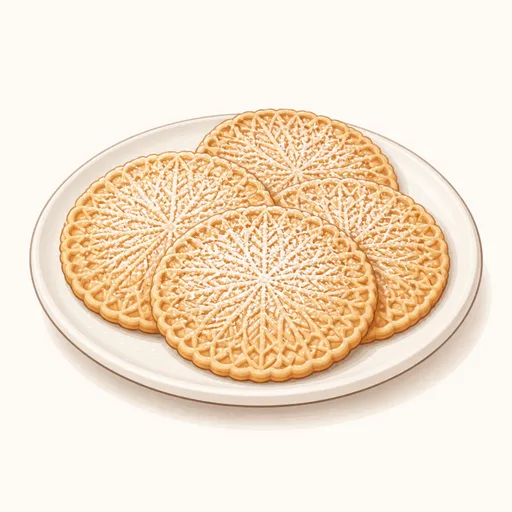
Pizzelle are thin traditional wafer cookies from Italy's Abruzzo region, pressed in an iron with a delicate snowflake pattern. They're crisp and delicate, fragrant with butter and that signature gentle sweetness of anise. While still hot they're soft and pliable, so you can roll them into tubes or press them into little cups for ice cream.
- Difficulty
- Easy
- Prep
- 15 min
- Cook
- 35 min
- Rising or chilling
- 15 min
- Total time
- 1 hr 5 min
- Method
- Pan-cooked or waffle iron
Ingredients
Batter
Sugar dusting
Instructions
Step 1
Put 115 g unsalted butter in a small saucepan and melt it completely over low heat, then take it off the heat to cool slightly. Butter that's too hot can scramble the eggs when you mix them together. The butter is ready when it's clear and golden and the side of the pan feels only slightly warm.
Step 2
Whisk 150 g eggs with 150 g granulated sugar for about two minutes, then pour in the melted butter along with 5 g anise extract and 4 g vanilla extract and stir well. Whisking the eggs and sugar until thickened makes the pizzelle lighter and crisper. The mixture is ready when it's pale yellow, slightly thick and the butter is fully blended in with no greasy film.
Step 3
Sift 220 g all-purpose flour with 6 g baking powder and a pinch salt into the bowl and mix with a flat spatula until no dry flour remains. Pizzelle batter is thicker than regular waffle batter so it holds the pattern crisply. The batter is ready when it's thick and smooth and falls from the spatula in heavy ribbons.
Step 4
Let the batter rest at room temperature for about fifteen minutes. This gives the flour time to absorb the liquid, so the batter spreads evenly in the iron without holes. It's ready when it has thickened slightly and the surface looks smooth and glossy.
Step 5
Plug in the pizzelle maker or set a cast-iron pizzelle iron on the stove, heat it through completely and brush it with a thin layer of butter for the first batch. The iron has to be hot enough for the cookies to cook quickly without sticking to the pattern. It's ready when the indicator light changes or a drop of water sizzles on contact.
Step 6
Spoon about a tablespoon of batter slightly behind the center of each mold, close the lid and cook for thirty to forty-five seconds. Placing the batter a little toward the back helps it spread into an even circle when the lid closes. They're done when the steam has almost stopped and the cookies are ivory to pale golden.
Step 7
Lift each pizzelle out with a wooden skewer and lay it flat on a rack, or roll it straight away around a wooden dowel if you want tubes. They're only pliable for the first few seconds before they harden and crisp up very quickly. They're ready when completely cool and as crisp and firm as a wafer.
Step 8
Once the pizzelle are completely cool, lightly sift 20 g powdered sugar over the tops to make the pattern stand out. Dusting while they're still hot will melt the sugar into damp streaks. They're finished when a fine white layer of sugar has settled into the grooves of the pattern.
Equipment
- Waffle iron
- Mixing bowl
- Whisk
- Spatula
- Sieve
- Kitchen scale
- Small saucepan
- Wire cooling rack
Tips
- If you don't care for anise, swap it for grated lemon zest and a little extra vanilla for a lighter version.
- Press warm pizzelle into small bowls and you'll have crisp cups for holding ice cream or fruit.
- Two pizzelle sandwiched with cream cheese frosting or jam make a lovely treat for afternoon tea.
Storage
Once completely cool, pizzelle stay crisp for about two weeks in an airtight container at room temperature. If they soften from humidity, crisp them up again in a 150°C oven for about three minutes.
Common problems and how to fix them
- The pizzelle stick to the iron and tear when you lift them out.
- The iron wasn't hot enough or wasn't greased for the first batch. Heat the iron longer and brush it with a thin layer of butter before the first few batches.
- The pizzelle are thick and soft instead of crisp.
- You used too much batter or opened the iron too soon. Use less batter each time and wait until the steam has almost completely stopped.
This recipe is based on the common ratios for this bake and is written entirely in our own words.