Digestive biscuits
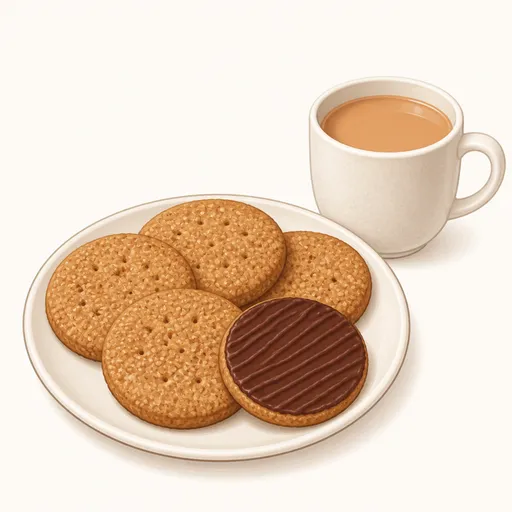
Digestive biscuits are a beloved British tea biscuit made with whole wheat flour and oats, giving them a nutty flavor, a lovely balance of sweet and salty and a sandy, crumbly crunch. They got their name because they were once thought to aid digestion. Enjoy them with milky tea, dip one side in chocolate, or crush them for a cheesecake crust.
- Difficulty
- Easy
- Prep
- 25 min
- Cook
- 17 min
- Rising or chilling
- 50 min
- Total time
- 1 hr 32 min
- Method
- Oven-baked
Ingredients
Biscuit dough
Chocolate coating (optional)
Instructions
Step 1
Put 40 g rolled oats in a food processor and process for about thirty seconds. Finely ground oats blend into the dough, adding a nutty flavor while keeping the biscuit surface smooth. The oats are ready when they look like coarse sand with just a few small flakes left.
Step 2
Add 200 g whole wheat flour, 70 g brown sugar, 4 g baking powder, 2 g salt and 115 g cold unsalted butter cut into small cubes to the processor and pulse in short bursts. Cold butter coated in flour creates the signature crumbly, short texture instead of a hard one. The mixture is ready when it looks like damp breadcrumbs and clumps slightly when squeezed.
Step 3
Tip the mixture into a bowl, drizzle 45 g cold whole milk over it and gather it into a dough with your hands, kneading lightly a few times. Minimal kneading keeps the gluten from developing so the biscuits don't turn tough. The dough is ready when it is fairly smooth, not sticky and no dry crumbs remain at the bottom of the bowl.
Step 4
Press the dough into a flat disc, wrap it in plastic wrap and refrigerate for about thirty minutes. Chilling lets the bran absorb moisture and firms up the butter, so the biscuits don't spread in the oven. The dough is ready when it is moderately firm and a finger press leaves a dent without cracking.
Step 5
While the dough rests, preheat the oven to 180 degrees Celsius and line a baking tray with parchment paper. An evenly heated oven bakes the thin biscuits crisp from edge to center at the same time. The oven is ready once it has been on for a full fifteen minutes.
Step 6
Roll the dough between two sheets of parchment paper to about four millimeters thick, cut out rounds with a cutter, prick each biscuit a few times with a fork and arrange them on the tray. Pricking lets steam escape so the biscuits bake flat without blistering. You've done it right when the biscuits are evenly thick with rows of little holes on top.
Step 7
Bake the biscuits at 180 degrees Celsius for about 14 to 17 minutes, until the edges turn golden brown. Whole wheat dough is naturally dark, so watch the edges rather than the tops. The biscuits are done when the edges are evenly golden brown, the tops are dry and the bottoms are a deep golden color.
Step 8
Leave the biscuits on the tray for two minutes, then move them to a rack and let them cool completely for about twenty minutes. Digestives only become crisp once the remaining moisture has evaporated. The biscuits are ready when they snap crisply in half and the inside is dry and crumbly.
Step 9
If you want chocolate-coated biscuits, melt 150 g dark chocolate over a pan of hot water on low heat, spread a thin layer over the underside of each biscuit, drag a fork through it to make wavy lines and set them chocolate side up to dry. Coating one side adds a gentle bitterness while keeping the biscuit crisp. The biscuits are finished when the chocolate has set hard with a light sheen.
Equipment
- Oven
- Food processor
- Mixing bowl
- Kitchen scale
- Rolling pin
- Cookie cutter
- Baking sheet
- Parchment paper
- Wire cooling rack
- Plastic wrap
- Refrigerator
Tips
- If you don't have a food processor, rub the cold butter into the flour very quickly with your fingertips so it doesn't melt.
- A little salt is the secret to their signature sweet-salty flavor, so don't skip it even though these are sweet biscuits.
- Crushed biscuits mixed with melted butter make an ideal crust for cheesecakes and no-bake tarts.
Storage
Once completely cool, store the biscuits in an airtight container or glass jar at room temperature, where they stay crisp for up to two weeks. Keep chocolate-coated biscuits in a cool, airy place so the chocolate doesn't melt, and eat them within a week.
Common problems and how to fix them
- The biscuits are rock-hard instead of crisp and crumbly.
- The butter melted during mixing or the dough was kneaded too long. Use very cold butter and gather the dough only just enough to form a ball.
- The dough cracks a lot when rolled.
- The dough is still too cold or a little too dry. Let it sit at room temperature for a few minutes, and if it still cracks, add a teaspoon of milk and gather it together again.
This recipe is based on the common ratios for this bake and is written entirely in our own words.