Cat tongue cookies
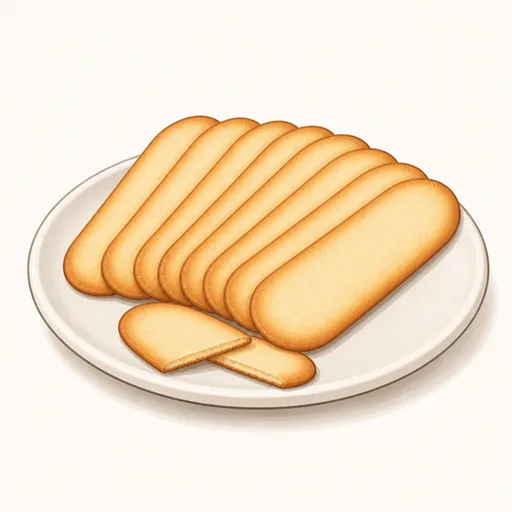
Cat tongue cookies are thin, long little cookies with golden brown edges and pale centers, wonderfully crisp and fragrant with butter and milk. Made with egg whites, they're incredibly light, a beloved part of Lunar New Year cookie tins, and perfect alongside ice cream or afternoon tea.
- Difficulty
- Easy
- Prep
- 25 min
- Cook
- 30 min
- Total time
- 55 min
- Method
- Oven-baked
Ingredients
Instructions
Step 1
Preheat the oven to 170°C and line three baking sheets with parchment paper, since these thin cookies are baked in several batches. A fully preheated oven helps the delicate strips bake evenly. The trays are ready when the paper lies flat without curling at the edges.
Step 2
Put 100 g softened unsalted butter, 90 g powdered sugar and a pinch salt in a bowl and beat with a mixer on medium speed for about three minutes. Moderately creamed butter makes the cookies light and crisp without puffing out of shape. The mixture is ready when it's white, smooth and fluffy like buttercream.
Step 3
Lightly beat 100 g room-temperature egg whites, then add them to the butter in four additions along with 3 g vanilla extract, beating thoroughly after each one before adding more. Egg whites are mostly water, so adding them a little at a time keeps the butter from separating. The mixture is ready when it's soft, silky and glossy, with no tiny lumps.
Step 4
Sift 100 g cake flour into the bowl and gently fold it in with a spatula just until no dry flour remains. Minimal mixing keeps gluten from developing, so the cookies turn out crisp and delicate rather than chewy. The batter is ready when it's smooth and thick and falls slowly from the spatula in a heavy ribbon.
Step 5
Spoon the batter into a piping bag fitted with a small round tip of about 1 cm, pipe 6 cm long strips onto the trays at least 3 cm apart, then tap the trays lightly on the counter. The cookies spread to almost twice their width in the oven, so they need room. The strips are ready when they're all the same length with slightly rounded ends, like little tongues.
Step 6
Bake one tray at a time on the middle rack at 170°C for about 8 to 10 minutes, staying close to the oven for the last few minutes. These cookies are so thin that just one extra minute can burn the edges. They're done when the outer edges are a deep golden brown and the centers are still a pale cream color.
Step 7
Take the tray out and use a thin spatula to move the cookies to a rack while they're still warm, then let them cool completely. They're soft and pliable while hot and turn crisp within a few minutes. They're ready when they snap crisply and the centers are no longer soft.
Equipment
- Oven
- Baking sheet
- Parchment paper
- Hand mixer
- Piping bag
- Spatula
- Sieve
- Kitchen scale
- Wire cooling rack
Tips
- Sprinkle a few black sesame seeds or sliced almonds over the strips before baking for an extra nutty touch.
- If you don't have a piping bag, a sturdy plastic bag with one corner snipped off works just as well.
- Dip one end of each cookie in melted chocolate and let it set for a lovely treat to give as a gift.
Storage
Cat tongue cookies absorb moisture very quickly, so put them in an airtight jar as soon as they're cool, with a food-safe desiccant packet if you have one. They'll stay crisp for about two weeks in a cool, dry place.
Common problems and how to fix them
- The cookies are soft and not crisp once cool.
- They were underbaked or the strips were too thick. Bake them for another one to two minutes until the edges are deep golden, and pipe thinner strips.
- The cookies run into each other.
- The strips were piped too close together or the batter was too runny. Next time, leave more space between them and make sure the butter isn't too soft before you beat it.
This recipe is based on the common ratios for this bake and is written entirely in our own words.